
When I first started thinking about growing a few vegetables, gardening felt like a massive topic. No matter what information I went looking for, there were more differing opinions, details, and options than I knew what to do with. Gardening felt really hard and complicated—and there seemed to be so much to know, I was sure I was going to do something wrong!
After a few years planting in containers, and now with a large garden to call my own, I’ve realized that gardening doesn’t have to be that hard. I started this blog series, “A Complete Guide for Beginner Gardeners,” to give you a sense of where to start when you’re creating a vegetable garden from scratch.
1. Start a Garden Journal
If you’re thinking of starting a vegetable garden, you’ve probably been thinking about it for a while. Maybe you’ve been drooling over pictures on Pinterest or Instagram, or dreaming about the yummy meals you’ll be able to cook with the vegetables you grow. Either way, you’re about to be bombarded with a lot of new ideas, information, and details you’ll want to remember.
A garden journal gives you a place to write all of these things down before it gets too overwhelming. It’s also a place to record things like the seeds you purchase, ideas for garden layouts, and observations along the way. Think of yourself as something like a scientist, and your garden journal as a place to record the details you’re likely to forget later—everything from how you dealt with a particular garden pest to where you planted the seeds you direct sowed (they may only take a few weeks to germinate, but trust me, you’ll have forgotten by then!).
There are lots of wonderful templates for garden planners and journals online, as well as apps and all kinds of different methods. Whatever you choose, go with something you find intuitive and easy to use—a simple notebook is the thing I reach for the most, so that’s what I use.
2. Determine Your Hardiness Zone and Last Frost Date
When choosing the plants to put in your garden, you’ll want to select varieties that will do well in your region. This is the purpose of your hardiness zone, often simply referred to as the “zone” when you’re looking at plant tags.
Your zone is particularly important to consider when you’re looking for perennials. Perennials are plants that return year after year from the same roots, like rhubarb or wildflowers. If you choose a perennial rated for a zone with a higher number than yours (e.g., a plant rated for zone 6a, but you live in zone 3b), the plant may not be able to survive the winter temperatures in your area.
Your last frost date determines when you can expect the last time frost will occur in the spring in your area. You will need to use this date to decide when to begin planting seedlings outdoors, as well as when to start seeds, if you’re starting your own.
For more information about Plant Hardiness Zones, check out this post by clicking here.
For help determining your last frost date, check out this post by clicking here.
3. Choose the Location, Size, and Container for Your Garden
In order to grow, plants need sunlight, water, and suitable temperatures, as well as air, soil nutrients and space. These needs are what you need to consider when choosing a location, size, and container for your garden.
Sunlight: For a vegetable garden, you will need to choose a location that receives a minimum of 6 hours of full, direct sunlight per day—more is even better for productive plants. The angle of the sun can change quite dramatically throughout the year, so it is best to assess the available sunlight during the summer months. The University of Saskatchewan has a great article on how to assess the sunlight in your garden here.
Temperatures: The location you choose for your garden will also decide the temperatures your plants experience—lower areas may create cooler microclimates, whereas well-sheltered areas may create warmer microclimates.
Water: No matter how much mulch you put down, you will likely need to water your garden several times over the growing season. Most vegetables need to be watered deeply about three times a week. Keep this in mind when choosing your location, or be prepared for how much water you’re going to need to haul!
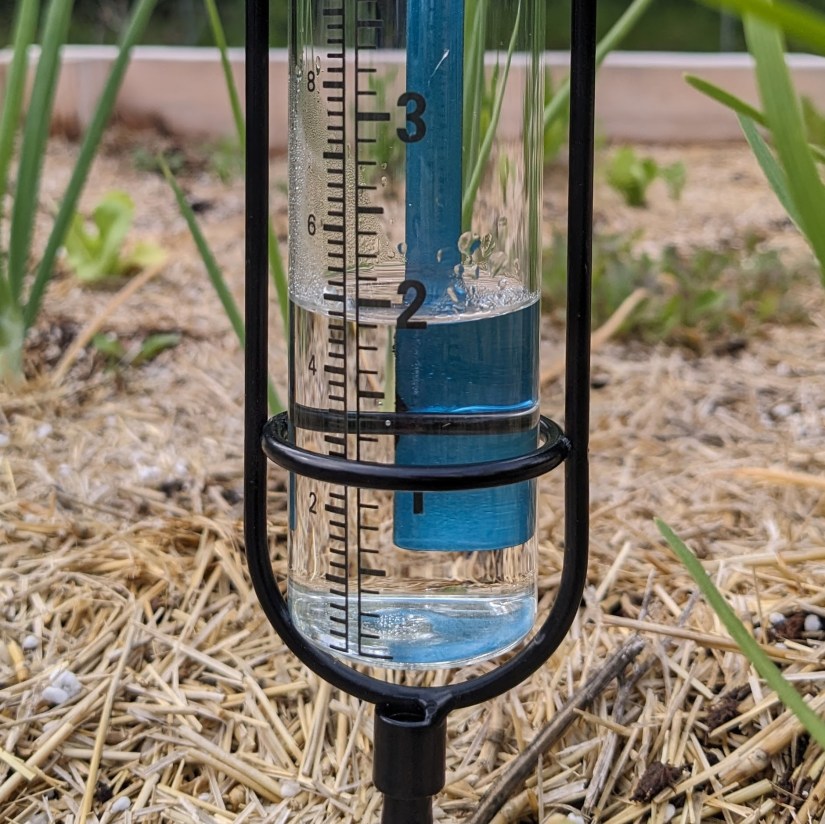
Air, Soil Nutrients, and Space: The size and container you choose for your garden will impact the air, soil nutrients, and space available to your plants.
When first starting out, it’s best to start small, and you can expand your growing space as you learn. Each seed packet or seedling you purchase will come with spacing recommendations on the label to help you ensure the plant has enough space to grow. If you are planting in a raised bed, the row spacing is less important.
To help you figure out how many plants you can fit in a raised bed based on the recommended plant spacing, check out the article “How to Convert Seed Packet Instructions for Square Foot Gardening” by clicking here.
If you are planting in pots or other smaller containers, filling them with potting soil is the easiest option to ensure optimal soil nutrients and drainage. However, you are planting in the ground, you will be working with pre-existing soil conditions, so you may want to send a sample for analysis and amendment recommendations.
4. Find Sources of Inspiration for Your Zone
When gardening starts to feel hard, or when I’m dreaming up what my garden could look like and what I want to try planting, I love looking at other people’s gardens for inspiration. However, lots of the garden photographs and advice you see on Pinterest or similar sources just won’t work in a cold climate garden.
Finding content creators and books specifically for my zone has been really helpful for getting tips and tricks, advice, and ideas that I can apply right away in my own space. To get started, try Google searches or hashtags including your province/state, region, or hardiness zone.
5. Start a List of What You Want to Grow
Some vegetables are much easier to grow than others, and some won’t do well in smaller containers. The following plants are commonly recommended as a good starting place for beginner gardeners:
- Beans
- Beets
- Carrots
- Chard
- Kale
- Lettuce
- Onions
- Peas
- Peppers (from nursery seedlings)
- Potatoes
- Radishes
- Spinach
- Tomatoes (from nursery seedlings)
- Zucchini
Choose vegetables that you’ll actually eat. If you don’t like it, don’t grow it!
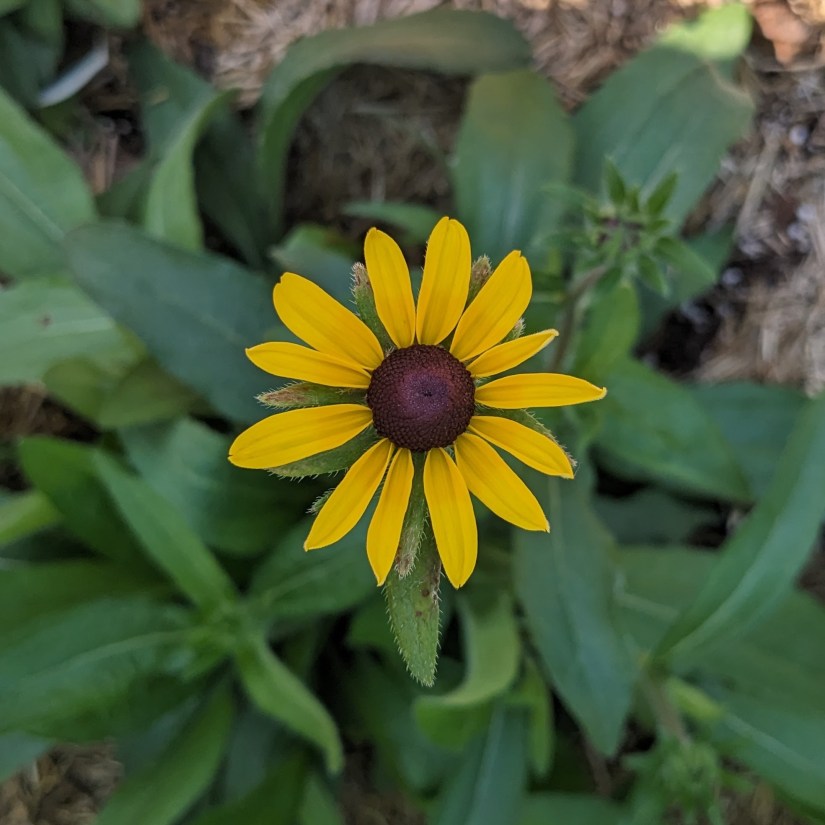
You’ll also want to pick a few flowers, such as marigolds, borage, or native wildflowers to encourage pollinators and discourage pests. I find West Coast Seeds’ Guide to Companion Planting quite useful for choosing flowers, as well as planning what to plant where.
I also like to choose at least a few plants each year that look particularly interesting, will stretch my growing skills, or give me the opportunity to learn something new.
6. Create a Planting Plan
It can be really tempting to just start sticking plants in the dirt after your last frost date passes—I’ve done it! However, I’ve since learned that a little advance planning makes planting a lot easier, and you’re less likely to end up overcrowding your plants or randomly sticking seedlings in the lawn because you’ve run out of space (yup, I’ve done that too).
Much like gardening journals, there are hundreds of templates for garden planners online if you like that sort of thing. For me though, a simple spreadsheet, some paper, and a few pencil crayons are the easiest method. Whatever you choose, you’ll want to create some kind of schedule that tells you what to plant when (particularly if you are starting some of your own seeds), as well as what to plant where and how much space they need.
Is this your first year growing a vegetable garden? Let me know what else you’d like to see me cover in this series in the comments! The next post series will talk about seed starting for beginners.
Sources
Part of why I created this blog was to record the answers to gardening questions I’ve had along the way. As a person who loves research, I thought it would be handy to have that research stored together, in a place where I could also share it with others. I encourage you to do your own research on anything I have posted, and I’ve included footnotes with my sources for information that isn’t based on personal experience—both so I can go back and reference the original source for something, and so you can do the same. Let me know if you spot any errors, so I can correct them!
- Beck, Andrea. (2023, January 23). 6 Secrets to Starting Your First Vegetable Garden Off Right. Better Homes & Gardens. https://www.bhg.com/gardening/vegetable/vegetables/planning-your-first-vegetable-garden/
- Boeckmann, Catherine. (2023, November 30). How Often Should a Garden be Watered? Almanac. https://www.almanac.com/when-water-your-vegetable-garden-watering-chart
- Boeckmann, Catherine. (2023, November 30). Vegetable Gardening for Beginners: The Complete Guide. Almanac. https://www.almanac.com/vegetable-gardening-for-beginners
- Duford, Mary Jane. (2023, November 10). Beginner Gardening. Home for Harvest. https://www.homefortheharvest.com/beginner-gardening/
- Gardening at USask. (2018, February 7). Assessing sunlight: shade, partial shade, partial sun, or full sun?. Retrieved January 31, 2024, from https://gardening.usask.ca/articles-and-lists/articles-how-to/assess-sunlight.php
- Gardening at USask. (n.d.) Water conservation in no till gardens. Retrieved February 7, 2024, from https://gardening.usask.ca/articles-and-lists/articles-notillgardening/water-notill.php#:~:text=Vegetable%20garden%20plants%20need%20around,equivalent%20of%201%E2%80%9D%20of%20water.
- Sansone, Arricca Elin. (2023, March 28). 11 Things Beginners Should Know Before Starting a Vegetable Garden. Country Living. https://www.countryliving.com/gardening/garden-ideas/g43413616/vegetable-garden-for-beginners/
- Tilley, Nikki. (2021, July 26). What Makes Plants Grow: Plant Growing Needs. Gardening Know How. https://www.gardeningknowhow.com/special/children/how-plants-grow.htm
- Walliser, Jessica. (n.d.). How to start a vegetable garden fast (and on a budget!). Savvy Gardening. https://savvygardening.com/how-to-start-a-vegetable-garden/
 Playing in the Dirt